Cybersecurity threats are more sophisticated than ever. Attackers are leveraging ransomware, cloud misconfigurations, and insider threats to compromise organizations of all sizes. Traditional perimeter-based security is no longer sufficient.
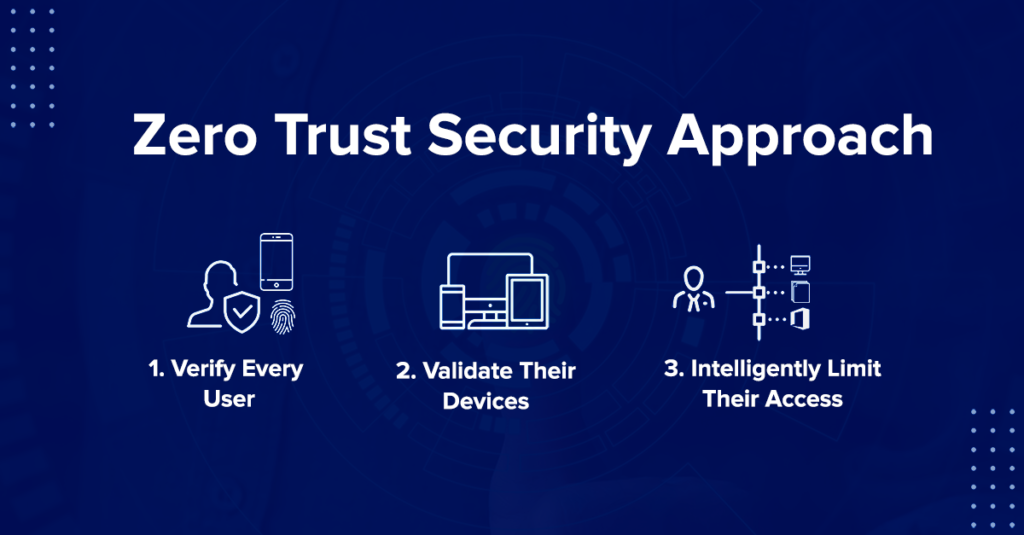
Zero Trust Security is emerging as the leading framework to protect modern enterprises. By assuming that no user, device, or system can be trusted by default, Zero Trust ensures that access is continuously verified and monitored. Combined with ransomware protection and cloud security best practices, it creates a robust, future-ready cybersecurity posture.
This guide will cover 7 strategies organizations can implement in 2026 to strengthen their defenses against cyber threats.
What Is Zero Trust Security?
Zero Trust Security is a cybersecurity model that enforces strict identity verification for every person and device trying to access resources on a network.
Key principles:
- Never trust, always verify – No user or device is automatically trusted.
- Least privilege access – Users get only the permissions they need.
- Continuous monitoring – Ongoing verification and analytics to detect anomalies.
By combining these principles with advanced tools, organizations reduce the risk of data breaches, ransomware attacks, and insider threats.
1. Implement Identity and Access Management (IAM)
IAM is the backbone of Zero Trust Security.
Best Practices:
- Enforce multi-factor authentication (MFA) for all users
- Use role-based access controls (RBAC)
- Implement conditional access policies based on location, device, or behavior
Learn more from NIST guidelines on identity management
2. Adopt Endpoint Detection and Response (EDR)
Endpoints are a primary target for ransomware attacks.
EDR Benefits:
- Monitors endpoint behavior in real time
- Detects malware, ransomware, and suspicious activity
- Provides automated response capabilities
3. Ransomware Protection Strategies
Ransomware is one of the fastest-growing cybersecurity threats.
Key Protection Measures:
- Regular, immutable backups
- Network segmentation to limit spread
- Employee training on phishing and social engineering
- Continuous monitoring for unusual file activity
Internal Link Example:
Check our guide on Cybersecurity Risk Management
4. Secure Cloud Infrastructure
Cloud adoption is skyrocketing, but misconfigurations are common.
Cloud Security Best Practices:
- Enable encryption at rest and in transit
- Apply strict access controls
- Monitor cloud workloads and APIs
- Use secure configuration baselines (CIS Benchmarks)
5. Network Segmentation and Micro-Segmentation
Zero Trust relies on limiting lateral movement within networks.
Implementation Tips:
- Segment networks based on sensitivity and function
- Apply micro-segmentation to critical assets
- Monitor traffic between segments for anomalies
6. Continuous Threat Monitoring and Analytics
Security teams need real-time visibility across endpoints, cloud environments, and user behavior.
Tools and Practices:
- Security Information and Event Management (SIEM)
- User and Entity Behavior Analytics (UEBA)
- AI-driven threat intelligence feeds
These tools help detect ransomware attempts, insider threats, and suspicious access patterns early.
7. Regular Security Audits and Compliance
Compliance ensures your security posture is aligned with industry standards.
Best Practices:
- Conduct periodic penetration tests and vulnerability assessments
- Audit access controls and IAM policies
- Keep cloud configurations compliant with standards like ISO 27001, SOC 2, and GDPR
Learn more about ISO 27001 standards: ISO 27001 Overview
FAQs About Zero Trust Security, Ransomware, and Cloud Security
1. What is Zero Trust Security?
Answer: Zero Trust Security is a cybersecurity model where no user, device, or system is trusted by default. Continuous verification and least-privilege access are core principles.
2. How does Zero Trust prevent ransomware?
Answer: By enforcing strict access controls, segmenting networks, and continuously monitoring behavior, Zero Trust limits ransomware spread and impact.
3. What are cloud security best practices?
Answer: Encrypt data, enforce strict access control, monitor cloud workloads, and follow secure configuration benchmarks.
4. Can small businesses implement Zero Trust?
Answer: Yes. Cloud-based security tools and IAM solutions make Zero Trust scalable and practical for SMBs.
5. How often should security audits be conducted?
Answer: Regularly—at least quarterly or after significant infrastructure changes—to ensure policies and controls are effective.
6. What is micro-segmentation?
Answer: Micro-segmentation divides a network into smaller zones, each with independent access rules, reducing lateral movement for attackers.
7. How does AI help in ransomware protection?
Answer: AI-driven monitoring detects unusual file behavior, predicts attacks, and automates response actions before widespread damage occurs.
Final Thoughts: Building a Future-Ready Cybersecurity Strategy
Zero Trust Security, combined with ransomware protection and cloud security best practices, is essential for organizations in 2026.
By implementing IAM, endpoint monitoring, cloud hardening, network segmentation, threat analytics, and regular audits, organizations can:
- Prevent ransomware attacks
- Reduce insider threat risks
- Protect sensitive data in the cloud
- Maintain compliance with evolving standards
Adopting these strategies positions businesses for a more secure and resilient digital future.