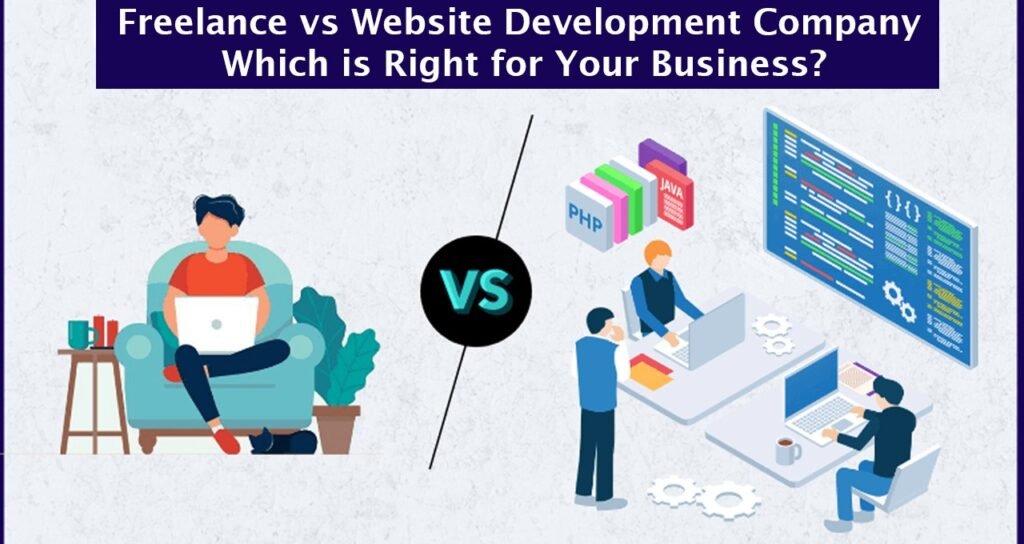
Introduction: The Decision That Could Make or Break Your Project
You’ve decided to build — or rebuild — your website. Now comes the question almost every business owner wrestles with:
Should I hire a web development company or a freelancer?
Both have genuine advantages. Both have real risks. And choosing the wrong one for your situation can cost you months of time, thousands of dollars, and a website that simply doesn’t perform.
This guide cuts through the noise. We’ll compare both options across every factor that matters — cost, quality, reliability, speed, and long-term value — so you walk away knowing exactly what’s right for your business.
→ Already know you need a professional team? Contact us for a free project quote.
What Is a Freelance Web Developer?
A freelance web developer is a self-employed individual who takes on web projects independently. They typically specialise in one or two areas — front-end design, WordPress development, or back-end engineering — and work with multiple clients at once.
You can find freelancers on platforms like Upwork, Fiverr, Toptal, and PeoplePerHour, or through word-of-mouth referrals. Rates vary enormously — from $15/hr for offshore talent to $150/hr for senior specialists in Western markets.
What Is a Web Development Company?
A web development company — also called a web agency or digital studio — is a business that provides end-to-end web services. A full team typically includes project managers, UI/UX designers, front-end and back-end developers, QA testers, and sometimes SEO and marketing specialists.
Agencies take on full accountability for your project: planning, building, testing, launching, and supporting it after go-live. They operate under formal contracts, service-level agreements, and business law — which gives you far stronger protection than working with an individual.
| 💡 Key Insight The fundamental difference is not just skill — it’s accountability and structure. A company has legal obligations, defined processes, and multiple people checking each other’s work. A freelancer is one person operating alone. |
Head-to-Head: Web Development Company vs Freelancer (12 Factors)
| Factor | Freelancer | Web Development Company |
| Cost | 💲 Lower hourly/project cost | 💲💲 Higher — but better ROI |
| Team Size | 1 person | Full team: dev, design, QA, PM |
| Accountability | Individual — limited recourse | Business entity — legal contracts & SLAs |
| Speed | Good for small tasks | Faster on complex, parallel workstreams |
| Quality Consistency | Varies project to project | Standardised processes, peer review |
| Communication | Direct but unstructured | Structured updates, dedicated PM |
| Scalability | Hard to scale | Can scale team instantly |
| Post-Launch Support | Often unavailable or extra cost | Ongoing retainers & support plans |
| Code Ownership | Varies — must confirm in contract | Always 100% yours |
| SEO & Performance | Depends on individual skill | Built-in by default |
| Best For | Small sites, one-off tasks <$3k | Growth projects, revenue-critical builds |
| 🏆 Overall Winner: Web Development Company — for any project where quality, reliability, and ROI matter. |
Factor Deep Dives: What Each Comparison Really Means
1. Cost — The Number Everyone Leads With
Yes, freelancers cost less upfront. But ‘cheap’ and ‘good value’ are very different things. A $500 freelancer who delivers broken code you spend $3,000 fixing is not cheaper than a $4,000 agency project that works perfectly from day one.
When evaluating cost, always ask: what is the total cost of ownership? Factor in revisions, delays, maintenance, and the opportunity cost of a website that doesn’t convert.
2. Quality & Consistency
Agencies have standardised processes — code reviews, design systems, QA checklists, and client sign-off at every stage. Every deliverable is checked by more than one person before it reaches you. Freelancers, even exceptional ones, don’t have this built-in safety net.
3. Accountability & Legal Protection
If a freelancer disappears mid-project (it happens more than you’d think), your options are limited. With a registered web development company, you have a formal contract, legal recourse, business insurance, and an entire team that doesn’t stop just because one person has a bad week.
4. Communication & Project Management
Agencies assign a dedicated project manager to your project. You get regular updates, structured feedback sessions, and a single point of contact who coordinates everything behind the scenes. With freelancers, you often become the de facto project manager — which takes time and expertise you may not have.
5. Post-Launch Support
Websites break. Plugins need updating. Traffic spikes happen. A web development company offers structured maintenance plans and guaranteed response times. Most freelancers offer post-launch support informally, at extra cost, and with no guaranteed availability.
→ Want ongoing support built into your project? Ask us about our maintenance plans.
Scorecard: Freelancer vs Web Development Company
| Category | Freelancer Score | Agency Score |
| Cost | ⭐⭐⭐⭐⭐ (5/5) | ⭐⭐⭐ (3/5) |
| Quality | ⭐⭐⭐ (3/5) | ⭐⭐⭐⭐⭐ (5/5) |
| Reliability | ⭐⭐ (2/5) | ⭐⭐⭐⭐⭐ (5/5) |
| Speed | ⭐⭐⭐ (3/5) | ⭐⭐⭐⭐ (4/5) |
| Scalability | ⭐ (1/5) | ⭐⭐⭐⭐⭐ (5/5) |
| Post-Launch Care | ⭐⭐ (2/5) | ⭐⭐⭐⭐⭐ (5/5) |
| TOTAL | 16 / 30 | 27 / 30 |
Real-World Scenarios: Which Option Is Right for Your Project?
Still unsure? Here’s how experienced business owners decide:
| Your Situation | Best Choice | Why |
| 5-page info website, $1,500 budget | Freelancer | Simple scope, cost-sensitive |
| E-commerce store, $8,000 budget | Agency | Needs design, dev, payment, SEO |
| Bug fix on existing site | Freelancer | Small, defined task |
| SaaS web app, $30,000 budget | Agency | Complex, long-term, team required |
| Monthly blog updates | Freelancer | Ongoing small tasks, low risk |
| Full brand + website launch | Agency | Strategy, design & dev under one roof |
| Custom API integration | Agency or Senior FL | High technical risk, needs QA |
| 📋 Rule of Thumb If the website or web app directly impacts your revenue, customer trust, or day-to-day operations — hire a web development company. If it’s a small, low-risk task with a defined scope, a vetted freelancer can work well. |
7 Costly Mistakes to Avoid Regardless of Who You Hire
- Choosing based on price alone — The cheapest option is rarely the best ROI. Think in outcomes, not hourly rates.
- No written contract — Verbal agreements are unenforceable. Always get scope, timeline, cost, revisions, and IP ownership in writing.
- Skipping the portfolio review — Past work is the most reliable predictor of future work. Check it thoroughly.
- Paying 100% upfront — Use milestone-based payments. Never release full payment before delivery and approval.
- Ignoring post-launch needs — Who updates the site? Who fixes bugs? Clarify this before the project begins.
- Not confirming code ownership — Make sure the contract explicitly states you own 100% of all code and assets on completion.
- Rushing the decision — A few extra days spent vetting properly saves weeks of fixing mistakes later.
Why Businesses Choose Us Over Freelancers and Generic Agencies
We built our company around one idea: business owners deserve agency-quality results without the agency-sized headaches. Here’s what that looks like in practice:
- 500+ Projects Delivered — Across e-commerce, SaaS, healthcare, real estate, fintech, and more.
- Dedicated Full-Stack Team — Every project includes a designer, developer, QA engineer, and project manager.
- Fixed-Price Quotes, Zero Surprises — You know the full cost before we write a single line of code.
- 97% On-Time Delivery Rate — We set realistic timelines and we meet them. Week-by-week updates keep you in control.
- SEO & Performance Baked In — Fast load times, clean code, mobile-first design, and on-page SEO from day one.
- 100% Code Ownership Guaranteed — Everything we build belongs to you. No lock-in, no proprietary platforms.
- Long-Term Partnership, Not Just a Project — Maintenance plans, growth retainers, and a team that knows your business.
- Real Communication — You’ll always know where your project stands. No ghosting, no delays without explanation.
We’re not the cheapest option. We’re the option that delivers real, measurable results — websites that rank, convert, and grow with your business.
| 🚀 Ready to Build Something That Actually Works? Tell us about your project and get a free, detailed quote within 24 hours. No pressure, no obligation — just clarity. 👉 Get Your Free Quote — No Commitment Required → |
Conclusion: So, Web Development Company or Freelancer — What’s Better?
The honest answer: it depends on what you’re building and what’s at stake.
For small, low-risk tasks with limited budgets, a skilled freelancer can get the job done. For anything that matters to your business — anything that generates revenue, builds trust, or represents your brand — a web development company is the smarter, safer, and ultimately more valuable choice.
The difference isn’t just about code quality. It’s about accountability, process, reliability, and having a team behind you that treats your project as seriously as you do.
If you’re ready to stop guessing and start building — we’re here.
Frequently Asked Questions
Structured for Google featured snippets, voice search, and People Also Ask.
Q1: Should I hire a web development company or a freelancer?
It depends on your project size and risk tolerance. Hire a freelancer for small, well-defined tasks under $3,000. Hire a web development company for complex, revenue-critical projects that require a full team, formal accountability, and long-term support. If your website directly impacts your business growth, a company is almost always the better investment.
Q2: Is hiring a web development company more expensive than a freelancer?
Yes — typically 30–50% more upfront. But agencies deliver better ROI in most cases. You get a full team, structured process, quality assurance, and post-launch support included. Factor in the cost of redoing a freelancer’s poor work, missed deadlines, or a website that doesn’t convert, and the agency often comes out cheaper overall.
Q3: What are the risks of hiring a freelance web developer?
Key risks include: the freelancer disappearing mid-project, inconsistent quality, limited accountability, no post-launch support, and unclear code ownership. Mitigate these by using a written contract, milestone-based payments, and an escrow service on platforms like Upwork.
Q4: How do I know if a web development company is trustworthy?
Look for a verified portfolio with live client work, reviews on platforms like Clutch or Google, a clear contract and pricing structure, named team members, and a transparent project management process. Avoid agencies that can’t show past work or won’t provide client references.
Q5: What questions should I ask before hiring a web development company?
Ask: Who will be working on my project? What does the project timeline look like? How do you handle revisions and change requests? What does post-launch support include? Who owns the code when the project is finished? Can you provide client references from similar projects? A reputable company will have clear, confident answers to all of these.