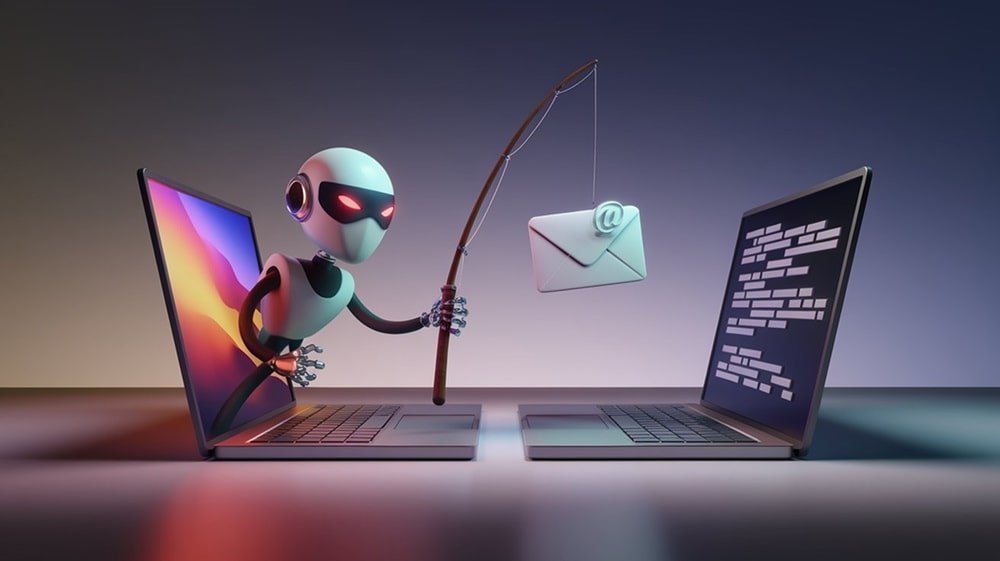
ntroduction to AI-Powered Phishing
Phishing has transformed from crude spam campaigns into a sophisticated, AI-driven threat that challenges even the most vigilant security teams. As we navigate through 2026, ai-powered phishing attacks have reached unprecedented levels of sophistication, with artificial intelligence enabling attackers to craft convincing messages, impersonate executives with deepfake technology, and bypass traditional security controls at machine speed.
Recent industry data from the Anti-Phishing Working Group (APWG) reveals alarming trends: phishing attacks surged to over one million incidents quarterly, with AI-generated content driving the evolution of social engineering tactics. More concerning, credential compromise attacks now involve sophisticated phishing toolkits in over ninety percent of cases, demonstrating how accessible these advanced capabilities have become.
However, the battle isn’t lost. Organizations implementing comprehensive, AI-enhanced defense strategies successfully detect and neutralize ai-powered phishing attempts before they cause damage. This guide explores the evolving landscape of ai-powered phishing in 2026 and provides actionable strategies for protecting your organization against these next-generation threats.
[Image Alt Text Suggestion]: “AI-powered phishing attack detection dashboard showing real-time threat analysis”
The Evolution of AI-Powered Phishing in 2026
From Spray-and-Pray to AI-Powered Precision Targeting
Traditional phishing relied on volume, sending millions of poorly crafted emails hoping a small percentage would succeed. Modern ai-powered phishing in 2026 represents a fundamental shift toward quality over quantity. Attackers now conduct extensive reconnaissance, gathering intelligence from social media, organizational charts, and public records to create highly personalized campaigns.
Attack timelines have compressed dramatically. Recent analysis from Cisco Talos Intelligence indicates that ai-powered phishing campaigns can complete reconnaissance, initial compromise, and data exfiltration in under one hour, one hundred times faster than human-operated attacks. This acceleration leaves traditional security teams struggling to respond before significant damage occurs.
Cybersecurity Threat Landscape 2026
The AI-Powered Phishing Arsenal: Advanced Techniques
Artificial intelligence has revolutionized every phase of phishing operations. Generative AI tools enable attackers to create flawless, contextually appropriate messages in any language, eliminating the grammatical errors and awkward phrasing that once helped identify phishing attempts.
AI systems analyze communication patterns within targeted organizations, mimicking writing styles, common phrases, and formatting preferences to create messages indistinguishable from legitimate internal communications. One documented case involved attackers using AI to perfectly replicate a chief financial officer’s email style across multiple company branches, successfully initiating fraudulent transfers.
AI-Powered Phishing-as-a-Service Industrialization
The cybercrime economy has matured into a sophisticated marketplace where ai-powered phishing capabilities are sold as services. Phishing-as-a-Service platforms provide everything needed to launch campaigns: pre-built phishing kits, convincing website templates impersonating major brands, automated email distribution systems, and even customer support for criminal affiliates.
This industrialization dramatically lowers barriers to entry. According to Krebs on Security, attackers with minimal technical skills can now launch sophisticated ai-powered phishing campaigns by simply purchasing access to these platforms, accelerating attack volumes and diversifying threat actor profiles.
Emerging AI-Powered Phishing Techniques in 2026
Deepfake Voice and Video: Advanced AI-Powered Phishing
Voice cloning technology has advanced to the point where attackers can create convincing audio impersonations from minimal source material. Reports from Gartner indicate that thirty percent of organizations experienced vishing or deepfake attempts, with attackers using synthesized voices to impersonate executives and authorize fraudulent payments.
Video deepfakes have progressed beyond detection capabilities for most users. Attackers conduct video calls impersonating company leaders, using realistic deepfakes to manipulate employees during calls that appear completely legitimate. Organizations must implement additional identity verification checks for users on front lines such as help desks and call centers to counter these ai-powered phishing threats.
QR Code Phishing (Quishing): AI-Powered Attack Vector
QR code phishing, known as quishing, has emerged as a major ai-powered phishing attack vector. Nearly one in four phishing campaigns now incorporates malicious QR codes that bypass traditional email security filters which cannot easily analyze graphical content.
Attackers embed QR codes in emails, physical mailings, and even manipulate legitimate materials to redirect users to phishing sites. When scanned with mobile devices, these codes direct users to credential harvesting pages that appear authentic, exploiting the trust users place in physical media and QR technology.
Polymorphic AI-Powered Phishing: Context-Aware Attacks
Polymorphic phishing represents one of the most challenging ai-powered phishing threats in 2026. These attacks change their appearance in real-time, adapting based on who views them and what security tools scan them. When automated security systems analyze a link, it displays benign content. When a human user clicks the same link, it deploys the actual phishing page.
According to SANS Institute, attackers leverage blob URIs to construct phishing pages locally within victims’ browsers, meaning there’s no external URL for traditional filters to block. This technique renders signature-based detection completely ineffective against ai-powered phishing.
AI-Powered Phishing MFA Bypass and Downgrade Attacks
As multi-factor authentication adoption increased, attackers developed sophisticated ai-powered phishing bypass techniques. Session hijacking attacks intercept authentication tokens after successful MFA verification, allowing attackers to access accounts without possessing credentials or second factors.
MFA downgrade attacks manipulate login flows to force systems into offering less secure authentication methods like SMS codes, which attackers can intercept. Push notification fatigue exploits overwhelm users with repeated MFA prompts until they approve a malicious request just to stop the notifications.
Learn more about MFA security from NIST Digital Identity Guidelines
Business Email Compromise: Evolved AI-Powered Phishing
Business email compromise has evolved beyond simple CEO fraud through ai-powered phishing techniques. Attackers now compromise legitimate accounts and conduct surveillance before launching attacks, understanding organizational processes, approval workflows, and communication patterns.
A fifty-eight percent rise in attacks originating from hijacked legitimate accounts makes detection significantly harder, as messages come from trusted sources and bypass authentication-based filters. Supply chain compromise provides particularly valuable access, enabling ai-powered phishing attacks against multiple organizations simultaneously.
Understanding the Human Element in AI-Powered Phishing
Why AI-Powered Phishing Remains Devastatingly Effective
AI-powered phishing succeeds because it exploits human psychology rather than technical vulnerabilities. Messages create urgency, invoke authority, leverage trust in familiar brands, and pressure recipients to act before thinking critically.
Research from Verizon’s Data Breach Investigations Report shows that seventy-four percent of successful breaches involved human error, with ai-powered phishing representing the primary mechanism. Even in well-secured environments with robust technical controls, human behavior remains the weakest link.
The Speed of AI-Powered Phishing Deception
Average click time on ai-powered phishing emails is just twenty-one seconds, demonstrating how quickly users respond to convincing messages. While median reporting time has improved to twenty-eight minutes, this still provides attackers substantial operational windows.
Organizations must recognize that preventing every employee from ever clicking an ai-powered phishing link is unrealistic. Instead, focus on creating resilient systems that detect and contain incidents quickly when inevitable human errors occur.
Comprehensive Defense Strategies Against AI-Powered Phishing
AI-Enhanced Detection Systems for AI-Powered Phishing
Traditional signature-based email security fails against modern ai-powered phishing. Organizations require AI-driven detection solutions that analyze behavioral patterns, communication anomalies, and subtle indicators invisible to rule-based systems.
Machine learning models establish baselines for normal communication within organizations, flagging messages that deviate from expected patterns. These systems detect subtle changes in tone, unusual requests from known contacts, and timing anomalies that suggest compromised accounts in ai-powered phishing campaigns.
Behavioral analytics monitor user activities continuously, identifying account compromises through unusual access patterns, geographic inconsistencies, or behavioral deviations from established profiles.
Explore advanced detection from Proofpoint Threat Protection
Phishing-Resistant Multi-Factor Authentication Against AI-Powered Phishing
Standard MFA implementations remain vulnerable to sophisticated ai-powered phishing attacks. Organizations must transition to phishing-resistant authentication methods including FIDO2 and WebAuthn security keys that cryptographically bind authentication to specific domains.
These hardware-based authentication mechanisms prevent ai-powered phishing credential theft because stolen credentials alone cannot grant access. Attackers cannot relay authentication attempts to legitimate sites since cryptographic verification fails when domain names don’t match.
Learn more about FIDO2 implementation from the FIDO Alliance.
Biometric authentication combined with device binding provides additional protection layers. However, implementation must be carefully designed, as some biometric systems remain vulnerable to spoofing attempts in advanced ai-powered phishing scenarios.
Advanced Email Security Platforms Blocking AI-Powered Phishing
Modern email security platforms move beyond simple spam filtering to implement multiple protective layers against ai-powered phishing. Link protection rewrites URLs, analyzing destinations in real-time before allowing user access. Suspicious links receive additional scrutiny or blocking.
Sandboxing executes email attachments in isolated environments, observing behavior before delivering files to users. Malicious activities trigger alerts and prevent delivery, protecting users from zero-day exploits and unknown malware in ai-powered phishing campaigns.
Natural language processing analyzes message content, identifying social engineering tactics, urgency creation, authority invocation, and other manipulation techniques that indicate ai-powered phishing attempts.
Review email security options from Mimecast
Zero Trust Architecture Defending Against AI-Powered Phishing
Zero trust principles prove particularly effective against ai-powered phishing. Continuous verification ensures that even if attackers obtain credentials through phishing, they cannot easily access sensitive resources without passing additional authentication checks.
Micro-segmentation limits what compromised accounts can access, preventing lateral movement across networks. Privileged access management protects high-value credentials through secure vaults and just-in-time provisioning that minimizes standing privileges.
Learn zero trust implementation from CISA Zero Trust Maturity Model
Comprehensive Security Awareness Training for AI-Powered Phishing
Security awareness training must evolve beyond annual compliance exercises to continuous, engaging education that builds genuine security culture against ai-powered phishing. Effective programs include simulated phishing campaigns that teach through realistic scenarios, regular reinforcement of key concepts through multiple channels, and role-specific training addressing unique risks faced by different employee groups.
Training should specifically address ai-powered phishing threats including deepfakes, quishing, and polymorphic attacks. Employees need to understand that traditional red flags may no longer appear, requiring increased skepticism and verification procedures.
Interactive training using real-world ai-powered phishing attack examples proves more effective than passive presentations. Gamification, competitions, and recognition programs increase engagement and knowledge retention.
Explore training platforms like KnowBe4
Industry-Specific Protection Strategies Against AI-Powered Phishing
Financial Services Defense Against AI-Powered Phishing
Financial institutions face sophisticated ai-powered phishing attacks targeting high-value transactions. Implement transaction verification workflows requiring multiple approval channels for significant financial movements. Out-of-band verification through separate communication channels confirms requests before execution.
Real-time fraud detection systems analyze transaction patterns, flagging anomalies that suggest compromised accounts or social engineering manipulation from ai-powered phishing. Integration between security systems and financial platforms enables rapid response to suspicious activities.
Healthcare Sector Protection from AI-Powered Phishing
Healthcare organizations must protect sensitive patient data while enabling rapid access during medical emergencies. Role-based access controls limit data exposure based on need-to-know principles. Comprehensive audit logging tracks all access to protected health information, supporting HIPAA compliance and ai-powered phishing breach investigation.
Medical device networks require segmentation from administrative systems, preventing ai-powered phishing compromises in office networks from affecting patient care systems.
Review healthcare security guidance from HHS Cybersecurity
Manufacturing and Critical Infrastructure vs AI-Powered Phishing
Manufacturing environments include operational technology that attackers increasingly target with ai-powered phishing. Strong network segmentation isolates OT systems from IT networks where phishing typically occurs. Enhanced monitoring detects unauthorized access attempts to industrial control systems.
Employee training must address operational disruption scenarios, helping staff recognize ai-powered phishing social engineering attempts designed to manipulate production processes or supply chain operations.
Small Business Protection Against AI-Powered Phishing
Small businesses often lack dedicated security teams but remain attractive ai-powered phishing targets. Cloud-based security services provide enterprise-grade protection without requiring internal expertise. Managed security providers offer monitoring, incident response, and ongoing security management at accessible price points.
Focus on fundamental controls including regular backups, multi-factor authentication, email security filtering, and basic security awareness training covering common ai-powered phishing tactics.
Access small business resources from CISA Cybersecurity
Response and Recovery from AI-Powered Phishing Attacks
Incident Detection and Reporting for AI-Powered Phishing
Establish clear, simple reporting mechanisms enabling employees to flag suspicious ai-powered phishing messages easily. Security teams should encourage reporting through positive reinforcement rather than punishment, recognizing that identifying potential threats benefits the entire organization.
Automated triage systems prioritize reported messages, accelerating analysis of genuine ai-powered phishing threats while reducing analyst workload. User reporting provides valuable threat intelligence about attack campaigns targeting your organization.
Rapid Containment Procedures for AI-Powered Phishing
When ai-powered phishing incidents occur, speed matters critically. Automated response capabilities isolate compromised accounts, revoke active sessions, and reset credentials before attackers leverage access.
Forensic investigation identifies attack scope, determining what data attackers accessed and what systems they compromised. This assessment guides recovery efforts and regulatory notifications following ai-powered phishing breaches.
Post-Incident Analysis of AI-Powered Phishing Attacks
Comprehensive post-incident reviews identify how ai-powered phishing attacks succeeded and what improvements would prevent recurrence. Document lessons learned and implement recommended changes promptly.
Share threat intelligence with industry peers through information sharing organizations like FS-ISAC or Health-ISAC. Your experience with ai-powered phishing helps the broader community defend against similar attacks.
Measuring Defense Effectiveness Against AI-Powered Phishing
Key Performance Indicators for AI-Powered Phishing Defense
Track metrics indicating ai-powered phishing resilience including phishing simulation click rates, time to detect reported threats, time to remediate compromised accounts, security awareness training completion rates, and MFA adoption percentages.
Compare performance against established baselines and industry benchmarks. Demonstrate improvement over time, justifying continued security investments to leadership for ai-powered phishing defense.
Continuous Improvement Programs Against AI-Powered Phishing
AI-powered phishing threats evolve constantly, requiring ongoing adaptation. Regularly update training content reflecting current attack techniques. Adjust security controls based on emerging threats and operational experience.
Participate in information sharing communities that provide real-time threat intelligence about active ai-powered phishing campaigns, emerging tactics, and effective countermeasures.
Join threat sharing through US-CERT
Looking Ahead: Future AI-Powered Phishing Trends
Anticipated Developments in AI-Powered Phishing
Expect continued AI advancement enabling even more convincing impersonations and faster attack execution. Identity-based ai-powered phishing attacks will increase as attackers recognize credentials provide superior access compared to malware deployment.
Multi-channel ai-powered phishing combining email, SMS, voice calls, and social media will create coordinated campaigns overwhelming traditional defenses focused on single channels.
Preparing Your Organization for Evolving AI-Powered Phishing
Build security programs emphasizing resilience and rapid recovery rather than perfect prevention. Assume ai-powered phishing attempts will occasionally succeed and focus on minimizing impact through quick detection and effective response.
Invest in AI-enhanced security tools that match attacker capabilities. However, maintain human oversight recognizing that AI systems lack contextual understanding that analysts provide in ai-powered phishing detection.
Conclusion: Defending Against AI-Powered Phishing in 2026
AI-powered phishing in 2026 represents one of the most sophisticated, pervasive threats organizations face. Attackers leverage artificial intelligence, deepfake technology, and phishing-as-a-service platforms to launch convincing campaigns at unprecedented scale and speed.
However, comprehensive defense strategies combining AI-enhanced detection, phishing-resistant authentication, zero trust architecture, and continuous security awareness enable organizations to protect against these advanced ai-powered phishing threats effectively.
Success requires moving beyond traditional email filtering to implement multilayered defenses addressing technical, procedural, and human factors. Organizations that invest in advanced security technologies while fostering genuine security culture will be best positioned to defend against ai-powered phishing both now and in the future.
The ai-powered phishing threat will continue evolving, but organizations embracing comprehensive, adaptive security strategies can successfully protect their data, systems, and people against even the most sophisticated attacks.
Frequently Asked Questions About AI-Powered Phishing
Q: What is AI-powered phishing? A: AI-powered phishing uses artificial intelligence to create highly convincing, personalized phishing messages that mimic legitimate communications, bypass traditional security filters, and adapt in real-time to evade detection.
Q: How does deepfake AI-powered phishing work? A: Deepfake ai-powered phishing uses AI-generated voice or video to impersonate executives or trusted individuals during phone calls or video conferences, manipulating victims into authorizing fraudulent transactions or revealing sensitive information.
Q: What is quishing in AI-powered phishing? A: Quishing refers to QR code phishing, where attackers embed malicious QR codes in emails or physical materials that redirect users to credential harvesting sites when scanned with mobile devices—a technique increasingly enhanced by AI.
Q: How can organizations defend against AI-powered phishing? A: Effective defense against ai-powered phishing requires AI-enhanced detection systems, phishing-resistant MFA like FIDO2 security keys, zero trust architecture, comprehensive security awareness training, and rapid incident response capabilities.
Q: What is phishing-resistant MFA for AI-powered phishing? A: Phishing-resistant MFA includes authentication methods like FIDO2 hardware security keys that cryptographically bind authentication to specific domains, preventing attackers from relaying stolen credentials to legitimate sites even in sophisticated ai-powered phishing attacks.
Q: Why does traditional email security fail against AI-powered phishing? A: Traditional signature-based filtering cannot detect polymorphic ai-powered phishing attacks that change in real-time, AI-generated content lacking typical phishing indicators, or blob URI-based phishing pages constructed locally in browsers.
Q: How quickly should organizations respond to AI-powered phishing incidents? A: Automated response should begin within minutes of detecting ai-powered phishing, isolating compromised accounts and revoking active sessions. Full investigation and remediation should complete within hours to minimize damage.
Q: Can security awareness training prevent all AI-powered phishing attacks? A: No single measure prevents all ai-powered phishing attacks. Training reduces success rates significantly but must be combined with technical controls, as human error remains inevitable in complex organizations.